Water is one of the most complex resources to govern. It flows across administrative boundaries, connects different territories, and involves economic, environmental, and social sectors that often operate at different scales. For this reason, water resources management increasingly requires integrated approaches capable of coordinating institutions, scientific data, and spatial planning at the river basin scale.
International cooperation represents, then, a key instrument for sharing experiences, governance models, and technical tools to address common challenges such as water security, drought management, and hydrogeological risk reduction.
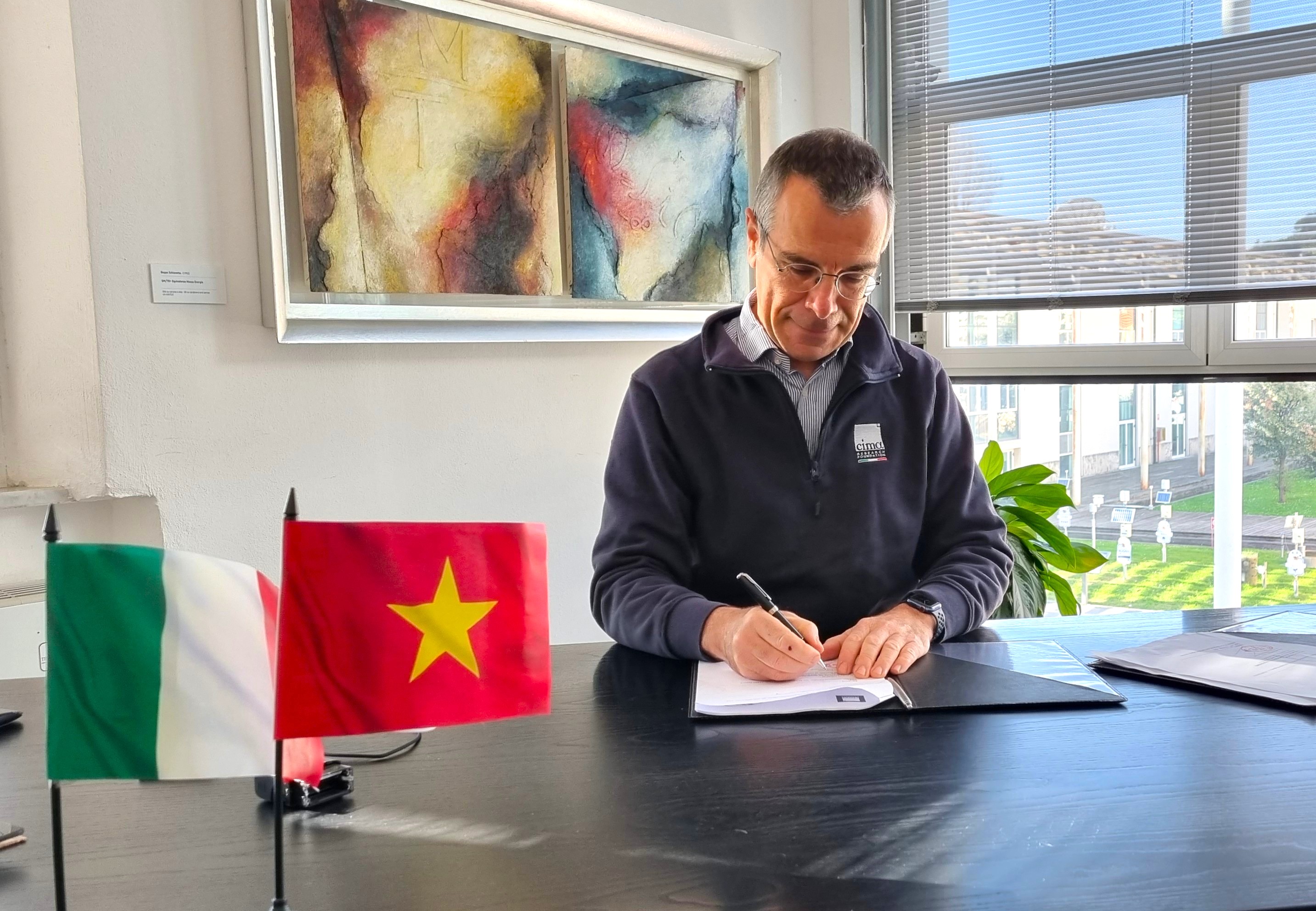
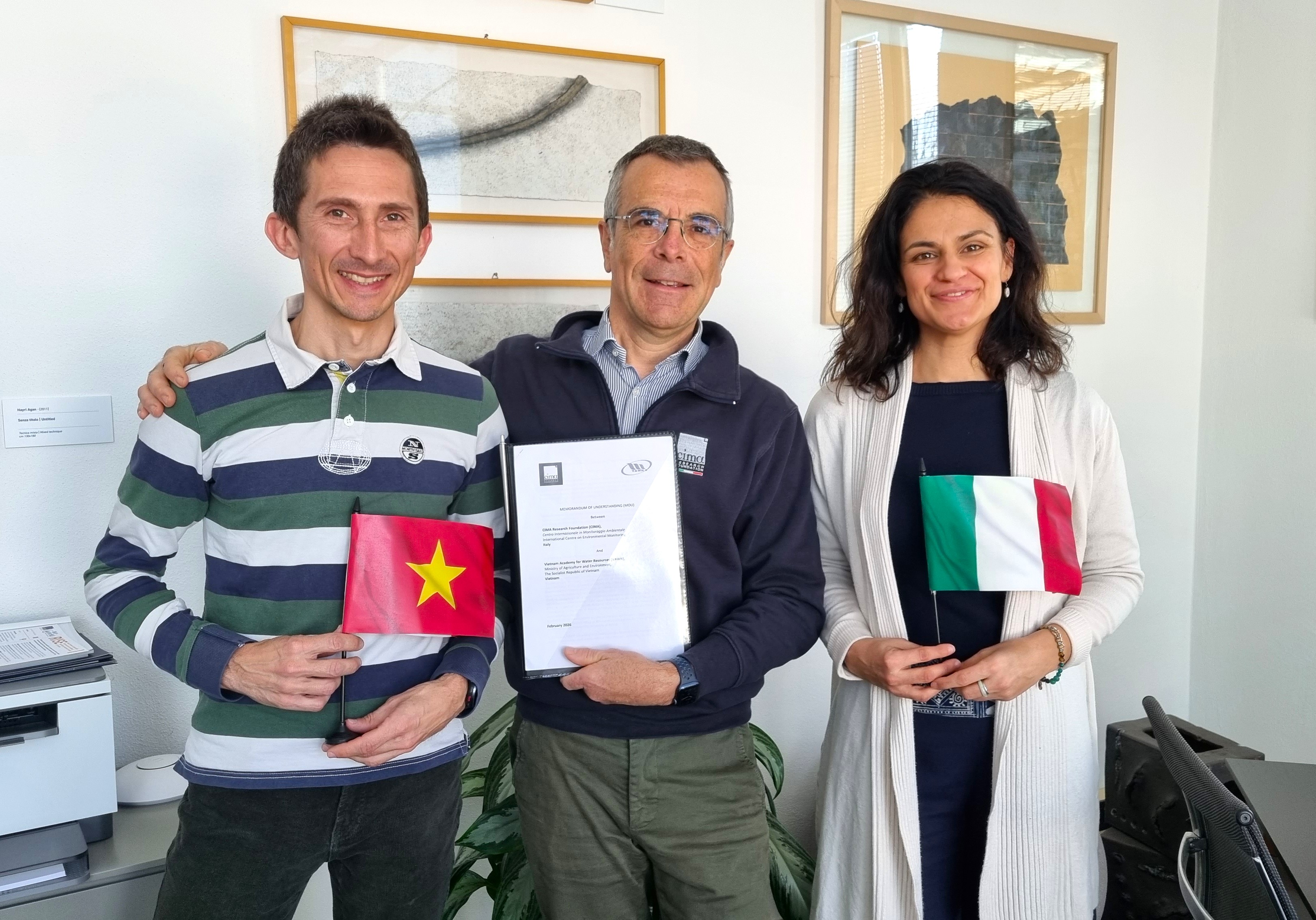
It is within this framework that the collaboration between Italy and Viet Nam takes place, leading to the signing of a Memorandum of Understanding (MoU) between the CIMA Research Foundation and the Vietnam Academy of Water Resources, with the aim of strengthening joint activities in research, training, and technical support in the field of water governance.
A cooperation project between Italy and Viet Nam
The Memorandum represents one of the most significant outcomes of the project Technical Assistance on Strengthening the Regulatory Framework of the Water Sector: Real-Time Multi-Basin Operations in Viet Nam, funded by the Italian Ministry of Foreign Affairs and International Cooperation through the Italian Agency for Development Cooperation (AICS) and implemented by the CIMA Research Foundation in collaboration with the Department of Water Resources Management (DWRM) of the Ministry of Agriculture and Environment of Viet Nam.
“The signing of the Memorandum attests to a cooperation that cultivates and consolidates good practices and that, thanks to the dedication of professionals with diverse expertise, fosters opportunities for sustainable growth: our guiding objective,” stated Dr. Margherita Lulli, Head of Development Cooperation, AICS Hanoi.
The initiative, developed over two years in close coordination with the AICS Hanoi office, aimed to strengthen the regulatory and operational framework for water resources management in the country, within the framework of the 2023 Law on Water Resources, while fostering the exchange of knowledge between the institutions and scientific communities of the two countries.
Among the activities carried out are the analysis of Viet Nam’s water governance system, the development of seasonal forecasts for the Dong Nai River Basin, and the introduction of the myDewetra platform, a decision support system enabling real-time integration and visualization of environmental data for water resources management and risk reduction.
Report on river basin governance
One of the main scientific outputs of the project is the report Recommendations for Advancing River Basin Governance in Viet Nam – An overview of the Italian River Basin Authority System: AUBAC’s case study, developed by CIMA Research Foundation in collaboration with DWRM and scientifically reviewed by Professor Marco Casini, Secretary General of the River Basin District Authority of the Central Apennines (AUBAC).
The document analyses the Italian model of water resources governance, organised at the river basin district scale and based on integrated planning instruments such as River Basin Management Plans and Flood Risk Management Plans, which enable coordination between environmental policies, spatial planning, and hydro-geological risk management.
Through the AUBAC case study, the report highlights the role of river basin authorities as institutional coordination platforms across different administrative levels, promoting integrated water resources management and greater coherence between environmental policies and territorial development.
“Water governance today requires a shift in both scale and perspective: it can no longer be addressed in silos, but must integrate data, models, and decision-making capacities across the entire river basin. Experiences such as the Italian one, developed over time through river basin district authorities, can provide useful insights for a scientific dialogue that is first and foremost an exchange of knowledge. Experiences produced in different contexts, such as Italy and Viet Nam, can mutually enrich each other, strengthening increasingly integrated and knowledge-based management systems,” said Luca Ferraris, President of the CIMA Research Foundation.