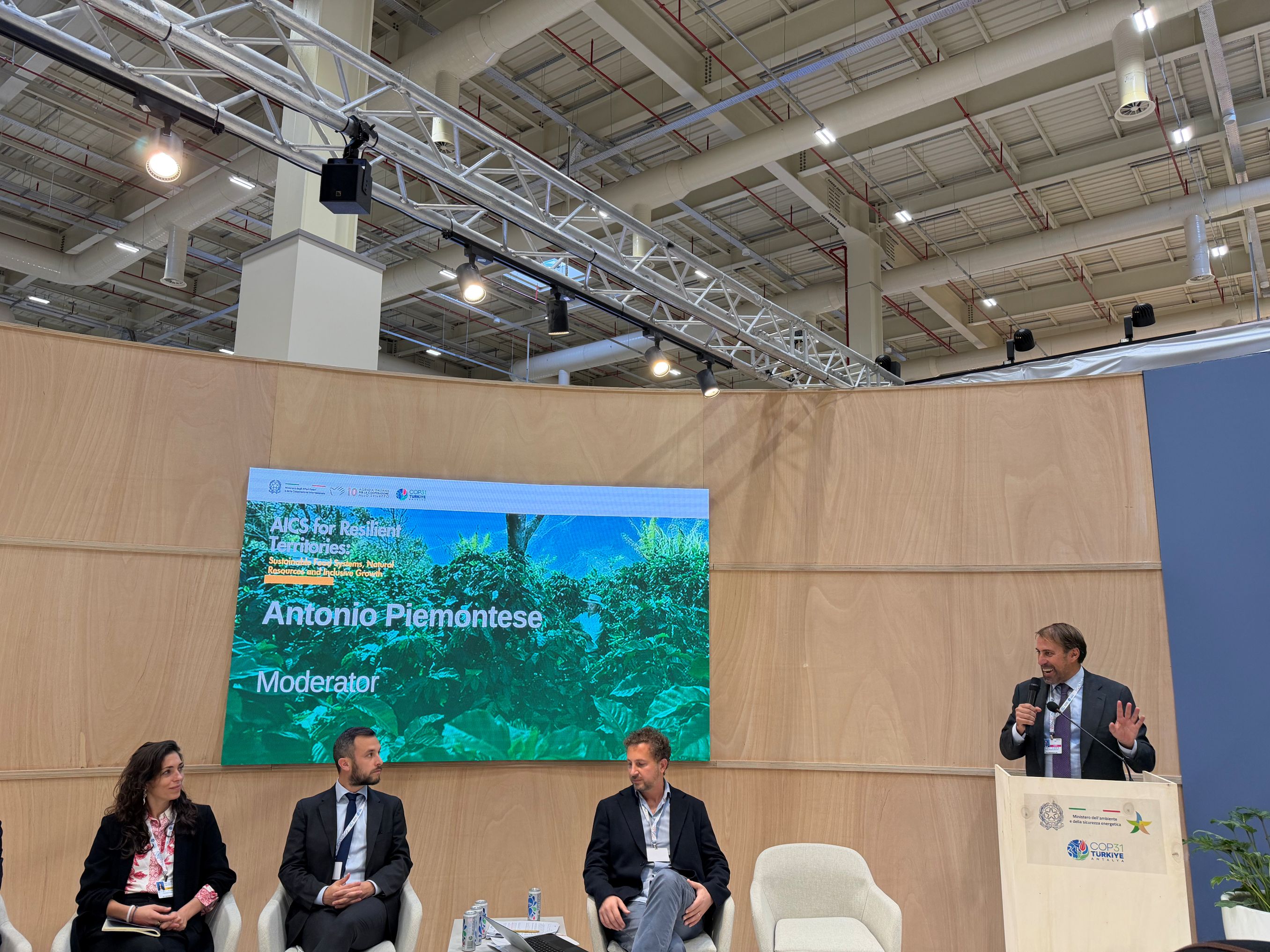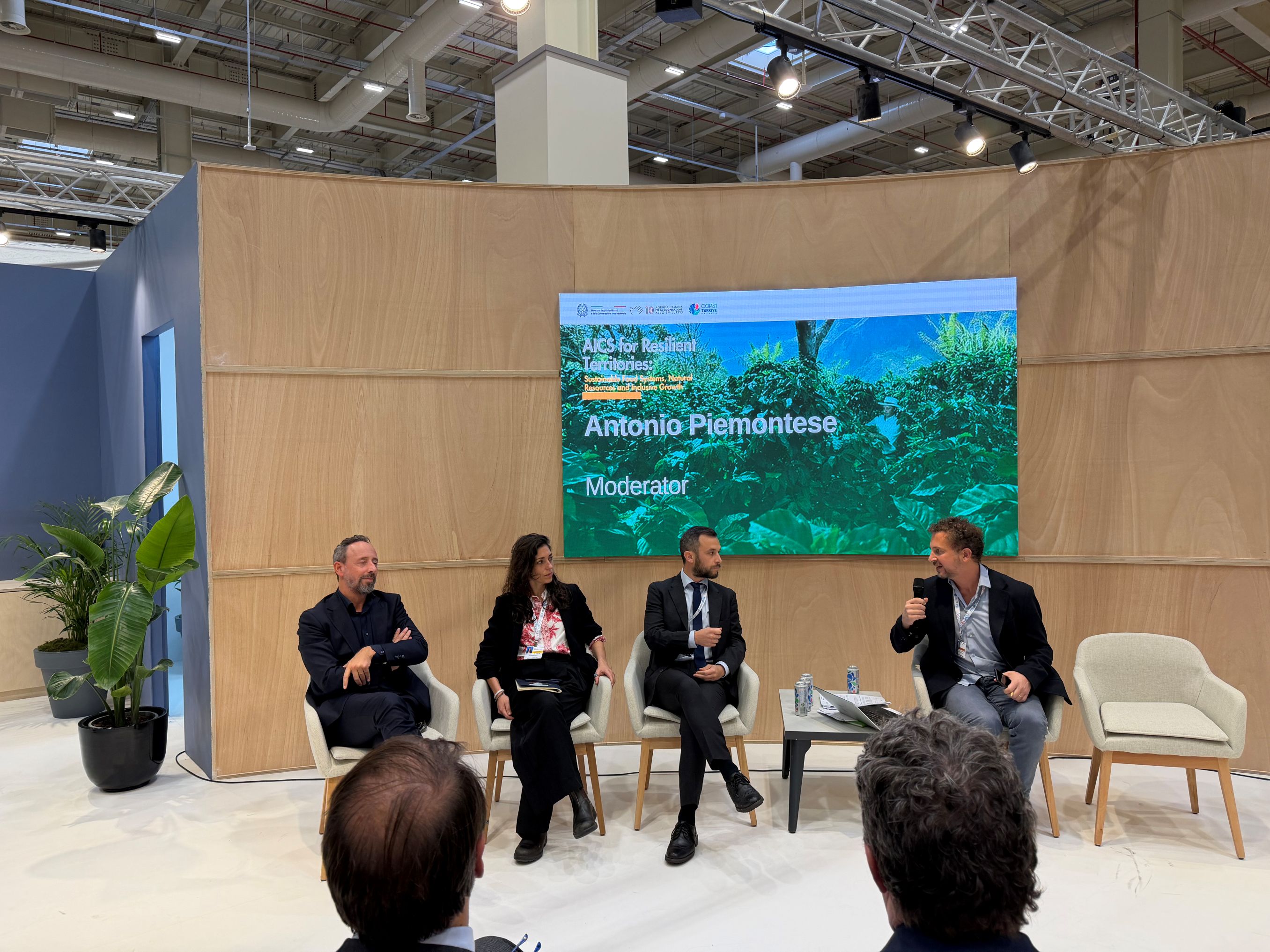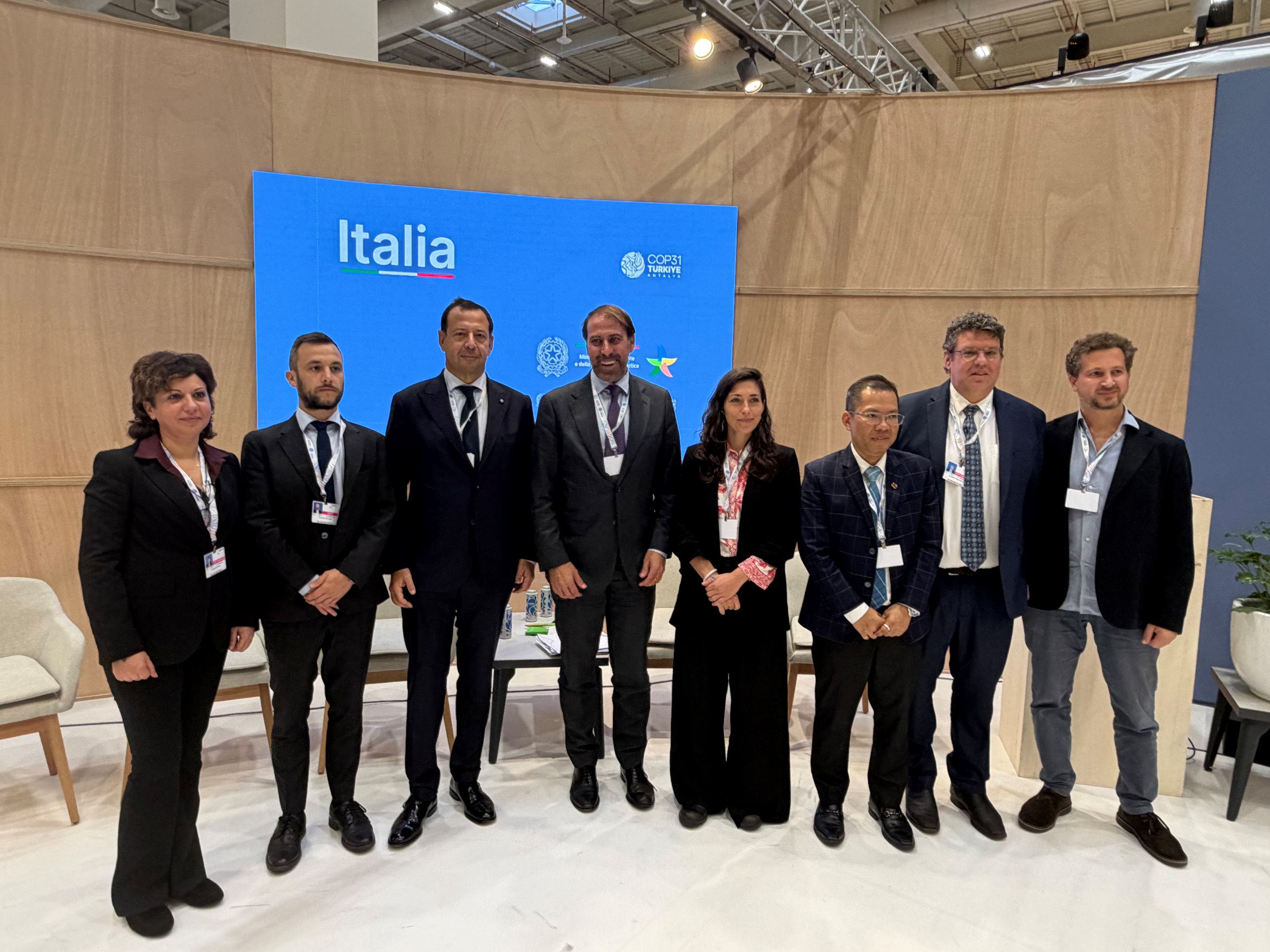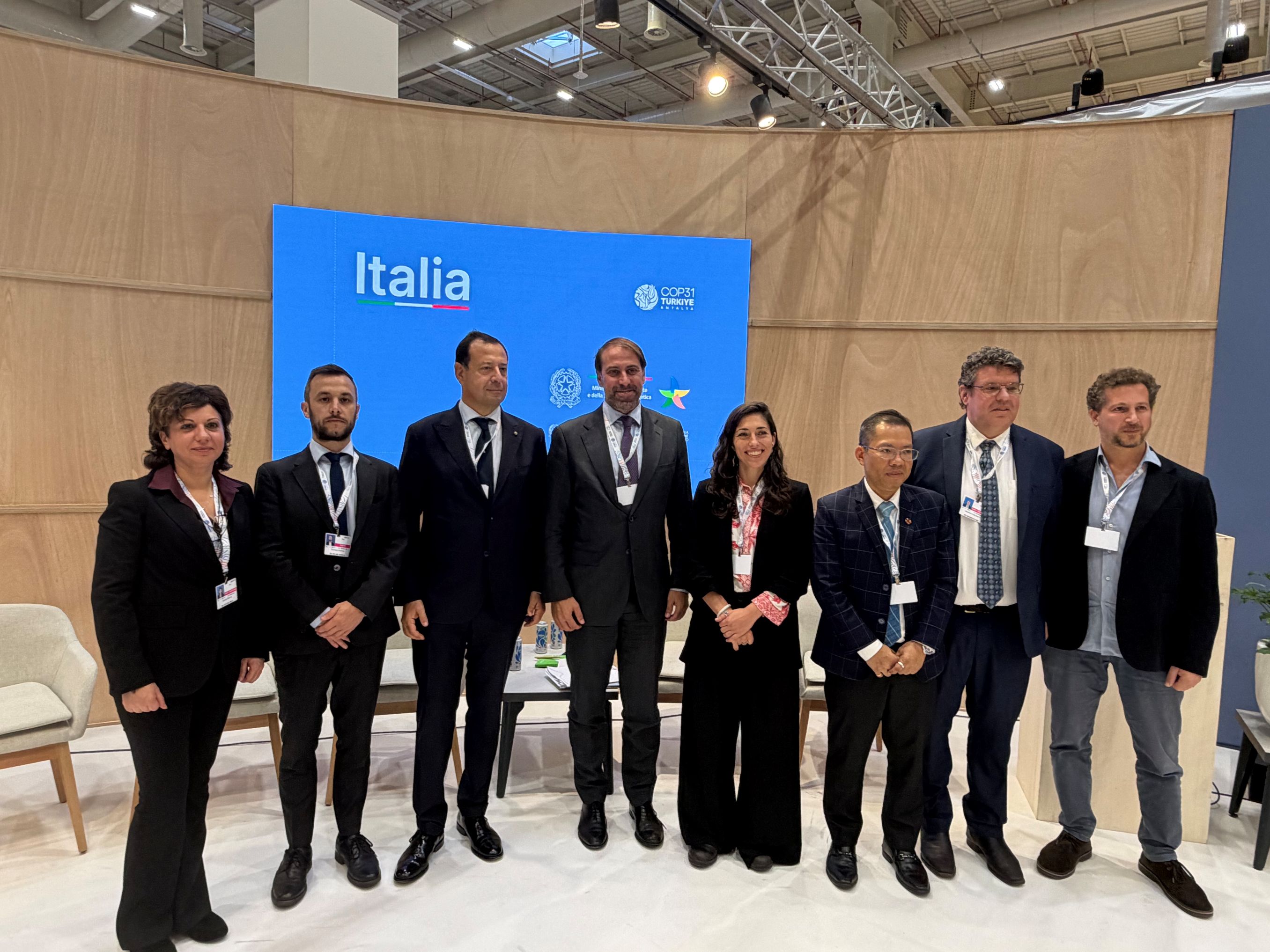
Hanoi – Sustainability is no longer understood merely as a constraint or a matter of environmental conservation, but rather as a driver of economic development, innovation and value creation for local communities. This was the central message conveyed by the AICS Office in Hanoi, which took part in COP31 in Antalya during the side event “Building Resilient Territories: AICS Experiences in Sustainable Food Systems, Natural Resource Management and Inclusive Growth”, held at the Italian Pavilion on 13 November. The event was opened by Marco Riccardo Rusconi, Director of the Italian Agency for Development Cooperation (AICS).
Organized jointly with the AICS Offices in Bogotá, Dakar and Tunis, the event provided a platform for dialogue among different geographical regions – from Latin America to the Mediterranean, West Africa and Southeast Asia – with the aim of identifying governance models, partnerships and replicable solutions to address the challenges of climate change and food security. During the first session, the Bogotá and Dakar Offices opened the discussion, focusing on the challenges posed by climate change and food security in Latin America and West Africa.
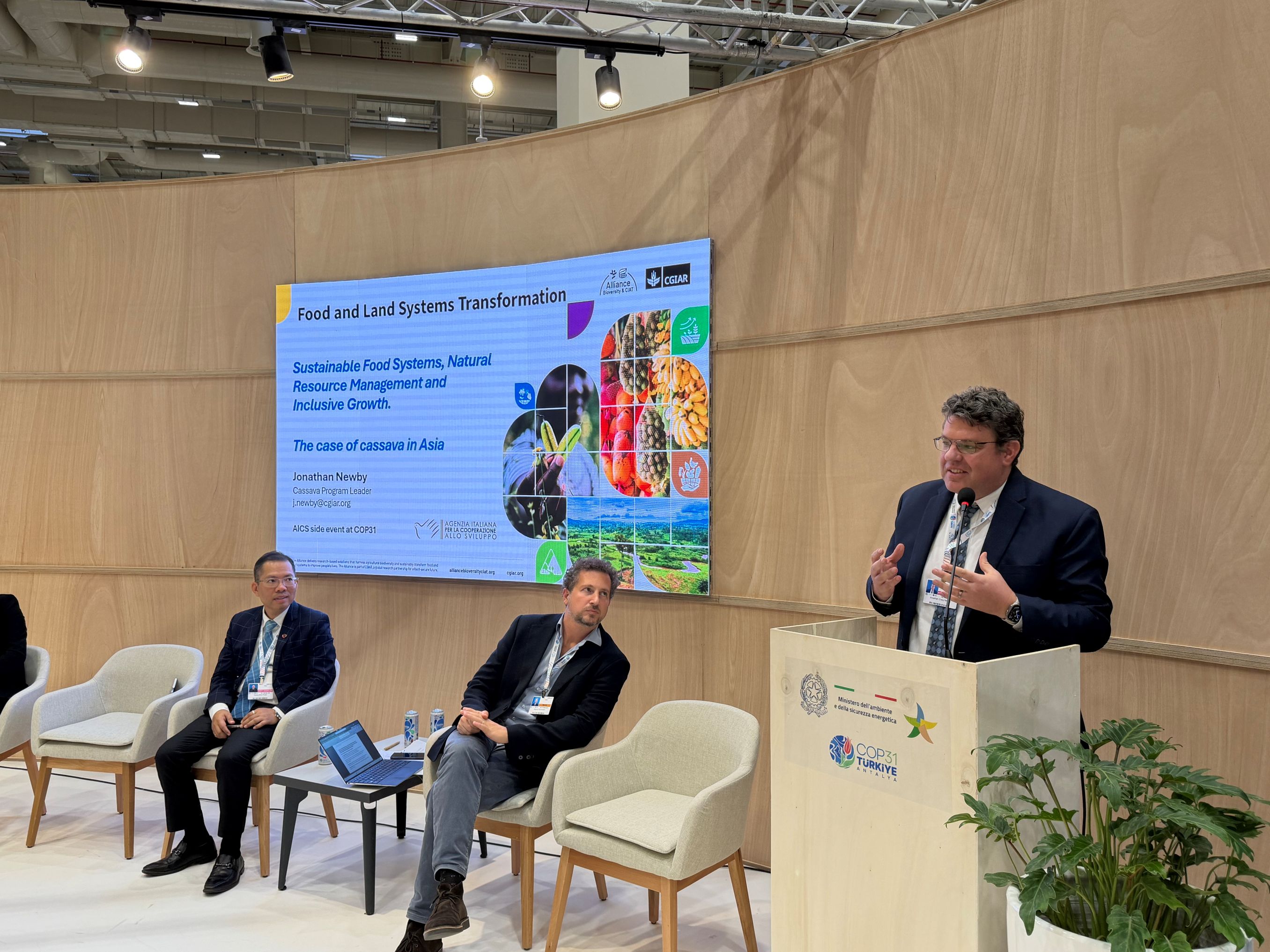
The second session, dedicated to experiences from the Mediterranean and Southeast Asia, featured the participation of the AICS Office in Hanoi, which, through contributions from Dr Jonathan Newby (Alliance of Bioversity International and CIAT) and Dr Pham Quang Minh (ASEAN Secretariat), illustrated how the integration of scientific research, technological innovation, the Blue Economy and biodiversity protection is contributing to the transformation of the region’s agri-food systems.
The turning point highlighted by AICS Hanoi lies in moving beyond the traditional view that relegated sustainability to a secondary or purely conservation-oriented element of development projects. The approach promoted by Italian Cooperation through two initiatives under the Italy–ASEAN Development Partnership demonstrates that protecting the environment and ecosystems can generate tangible economic opportunities and promote social inclusion, particularly for women, young people and small-scale producers.
For example, safeguarding local seeds and traditional crop varieties is not an end in itself, but acquires new economic value when integrated into sustainable and agroecological tourism initiatives, which have the potential to attract visitors and generate income for local communities. Another concrete example is provided by local and sustainable products, which can access stable and profitable markets through targeted policies, such as directly linking local agricultural supply chains with the demand generated by school canteens, while ensuring food security and quality nutrition.
The discussions in Antalya, enriched by ASEAN’s regional perspective and the field-based evidence provided by international research, confirmed that the experience gained by AICS in Southeast Asia represents a testing ground for scalable solutions: a model in which the ecological transition and economic growth go hand in hand, turning climate resilience into a strategic asset for the future of local territories.