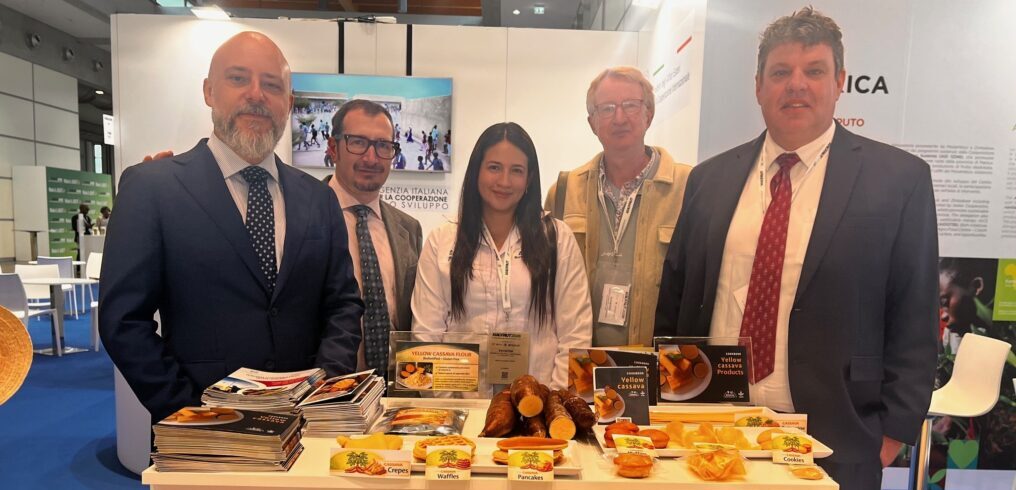
Macfrut 2026, the leading international trade fair for the fruit and vegetable supply chain, held in Rimini from 21 to 23 April, has ended. Once again, this year, Italian Cooperation played a prominent role with a single AICS stand, which brought together representatives from ten field offices, along with institutional delegations and producers from partner countries. The aim of this participation was to strengthen dialogue between Development Cooperation, agri-food value chains, and the Italian System, while showcasing experiences developed through programmes implemented in the Middle East, Africa, Latin America, and Asia.
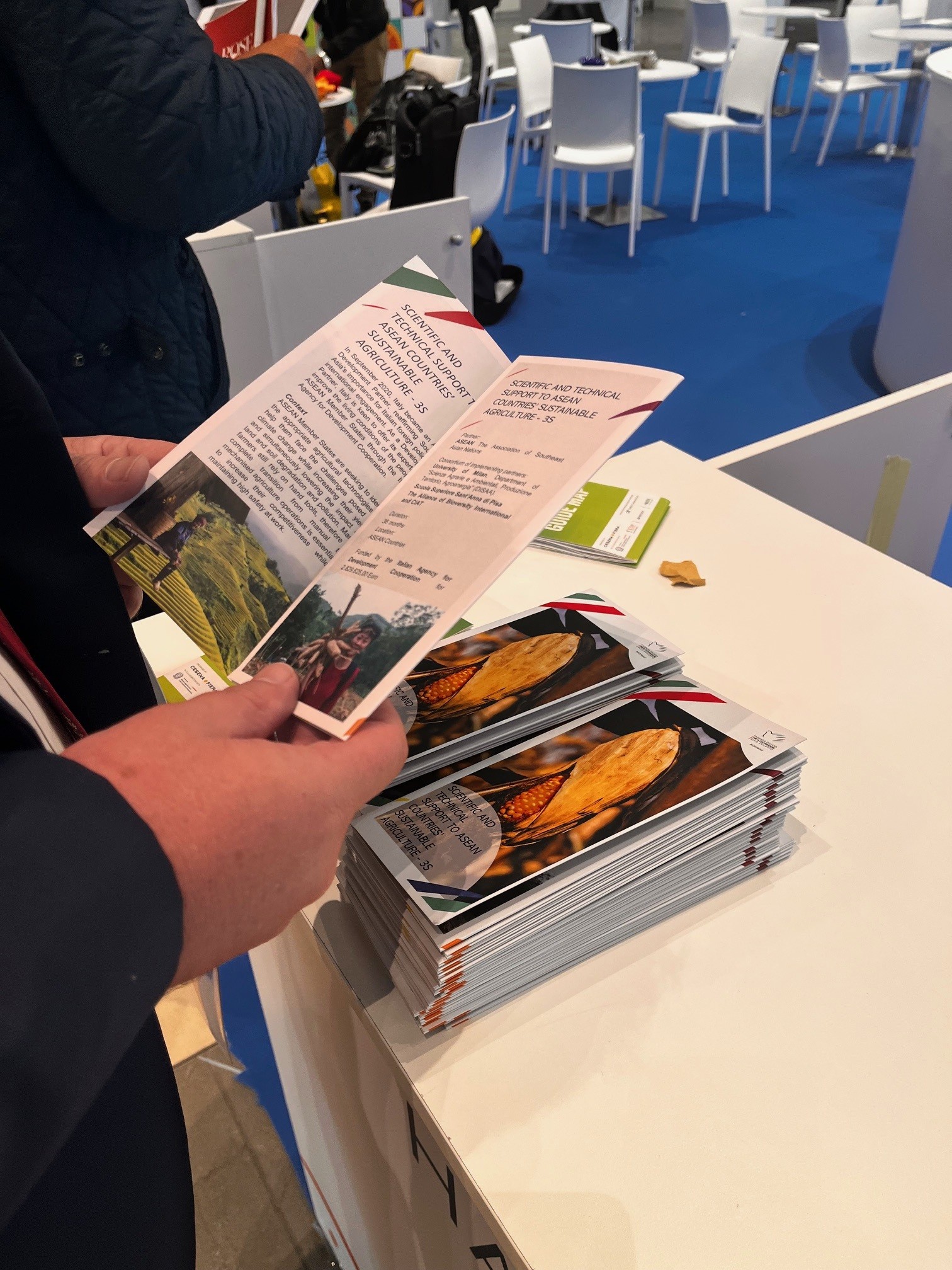
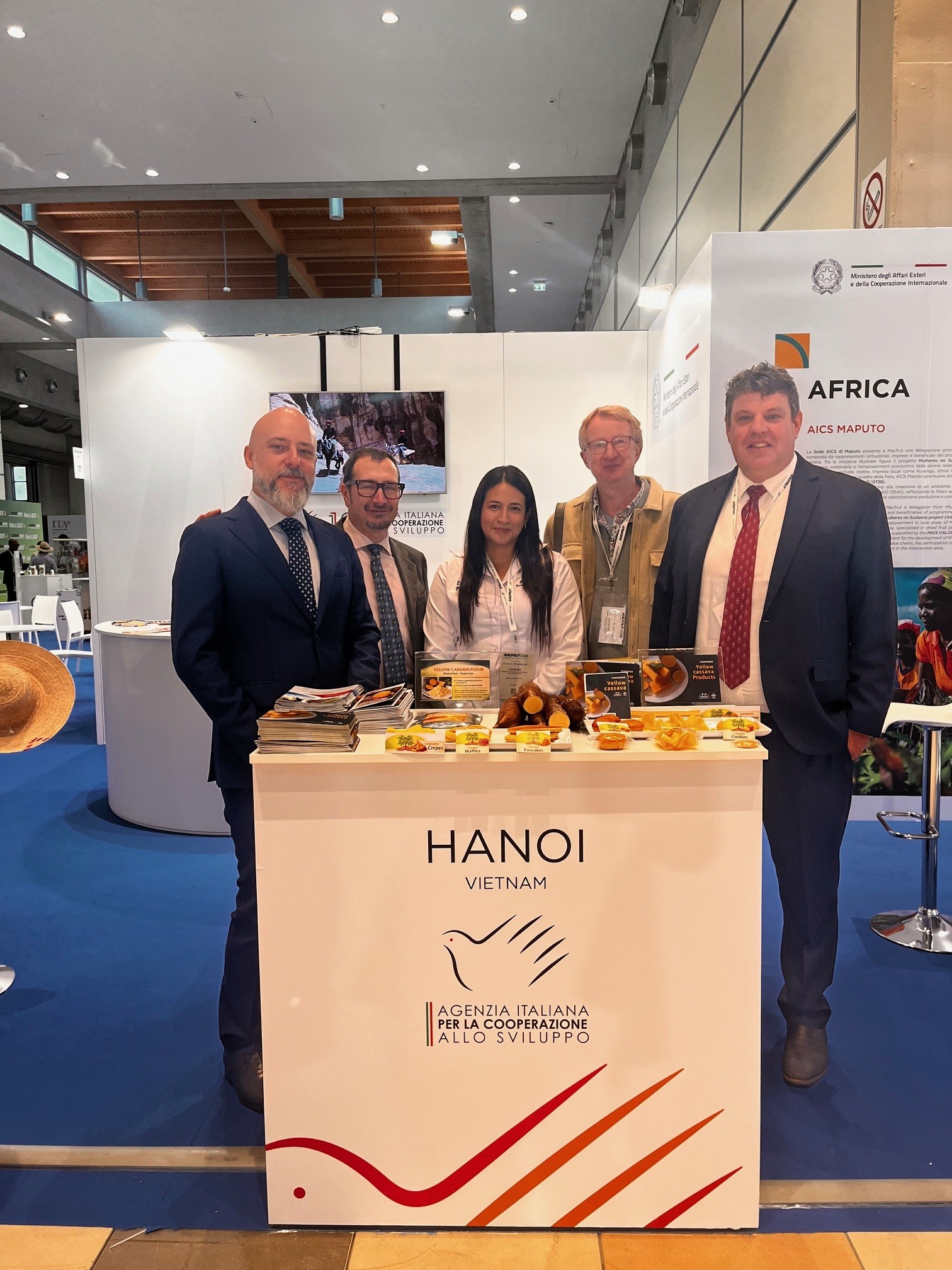
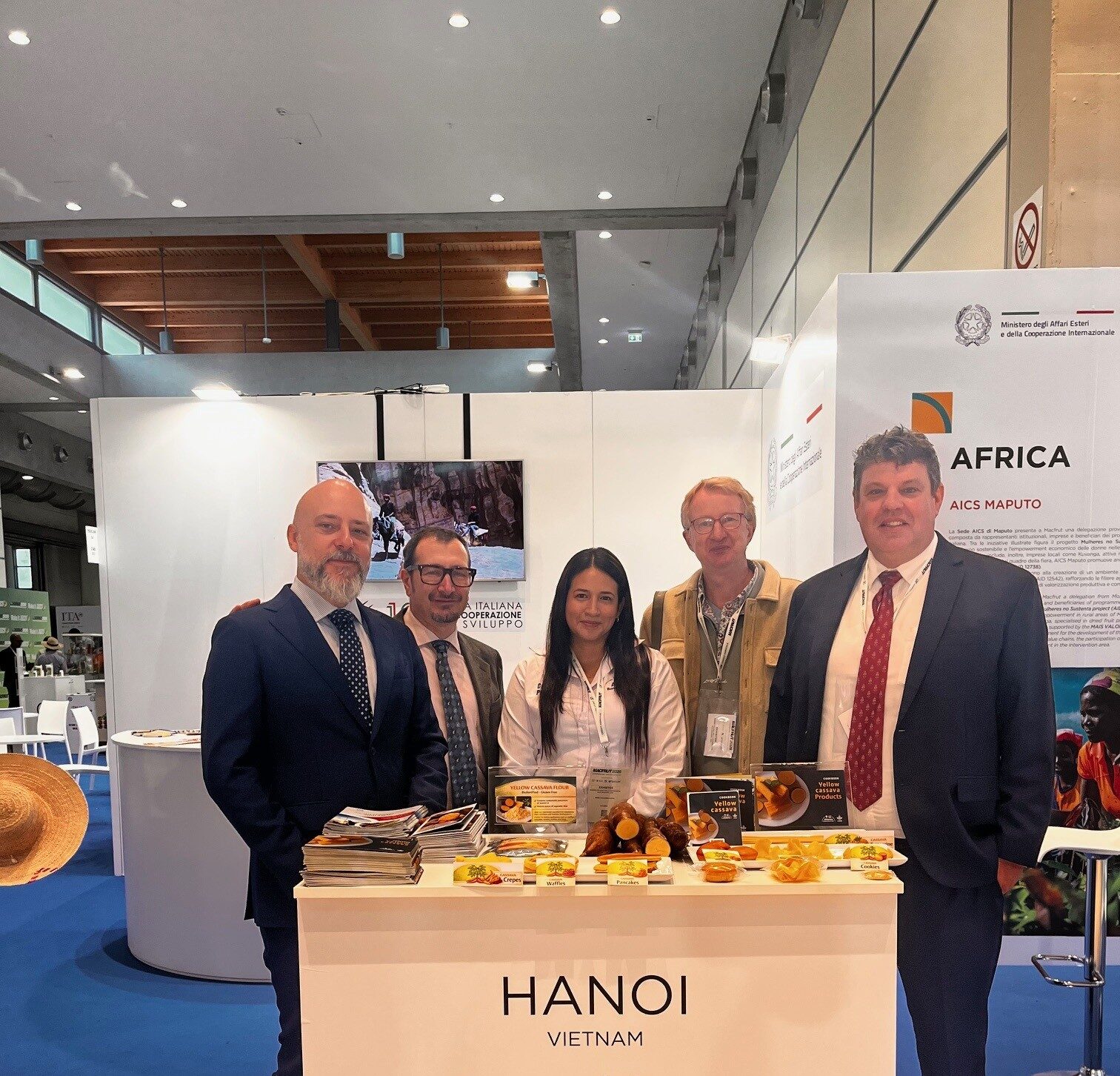
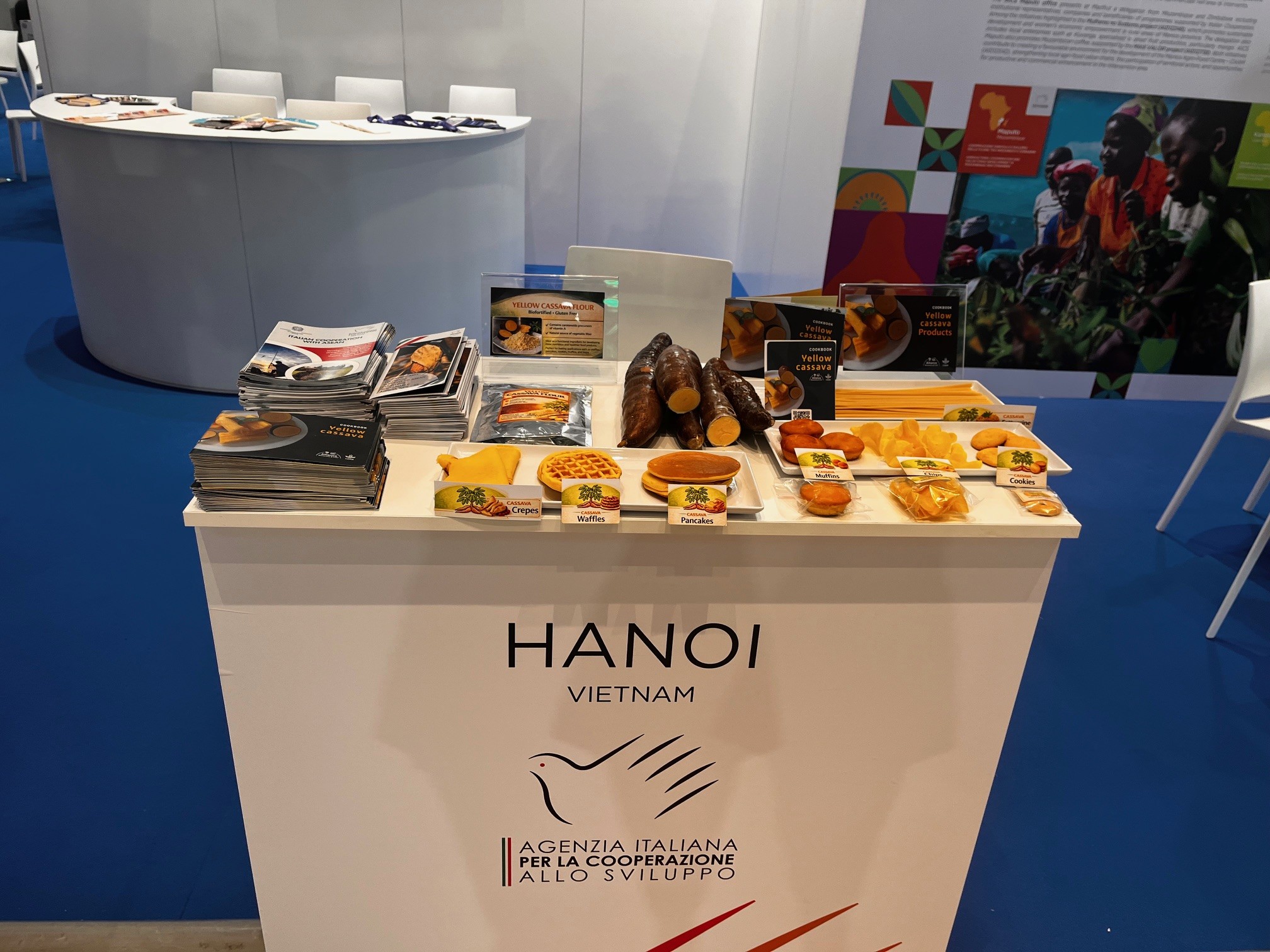
The AICS Hanoi Office took part in the event for the third time since 2022, the year of its reopening, confirming Macfrut as a well-established appointment. In this edition, AICS Hanoi presented its ongoing work on the cassava value chain, which—together with maize and sugarcane—is a central focus of the recently launched project “Scientific and Technical Support for Sustainable Agriculture in ASEAN Countries – 3S.”
The project aims to strengthen climate resilience and promote the socioeconomic and environmental sustainability of agriculture in ASEAN countries (Association of Southeast Asian Nations), through the introduction of sustainable agriculture practices and agricultural mechanization across the maize, cassava, and sugar value chains. Implementation of the 3S project is entrusted to a consortium comprising the University of Milan, the Sant’Anna School of Advanced Studies of Pisa, and the Alliance of Bioversity International and CIAT, and is funded by Italian Cooperation.
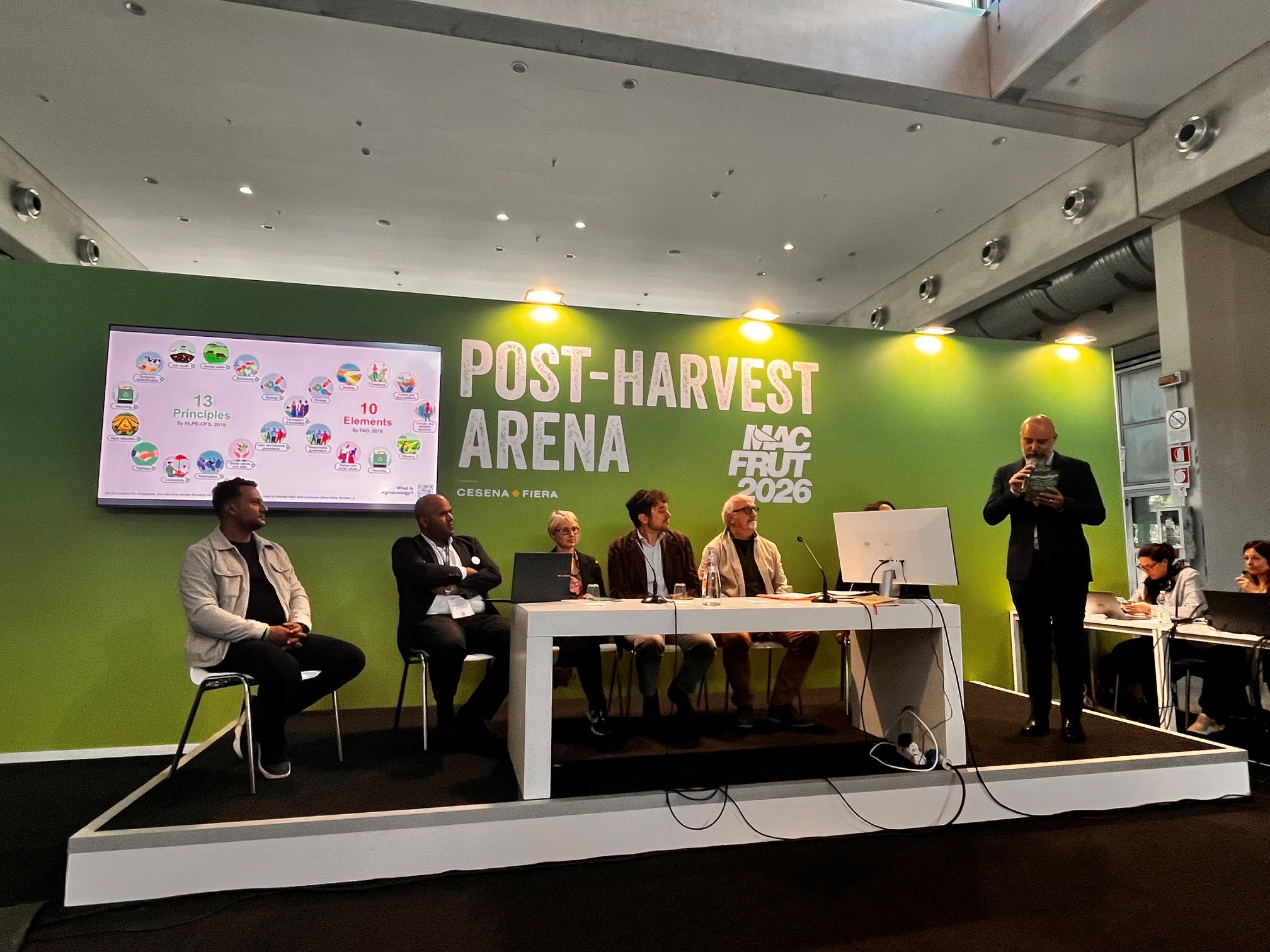
Macfrut thus represented an important showcase for presenting the activities of the 3S project and a valuable opportunity for dialogue on other cassava-related experiences, through participation in the AICS roundtable dedicated to agroecology, as well as the organization of two thematic side events.
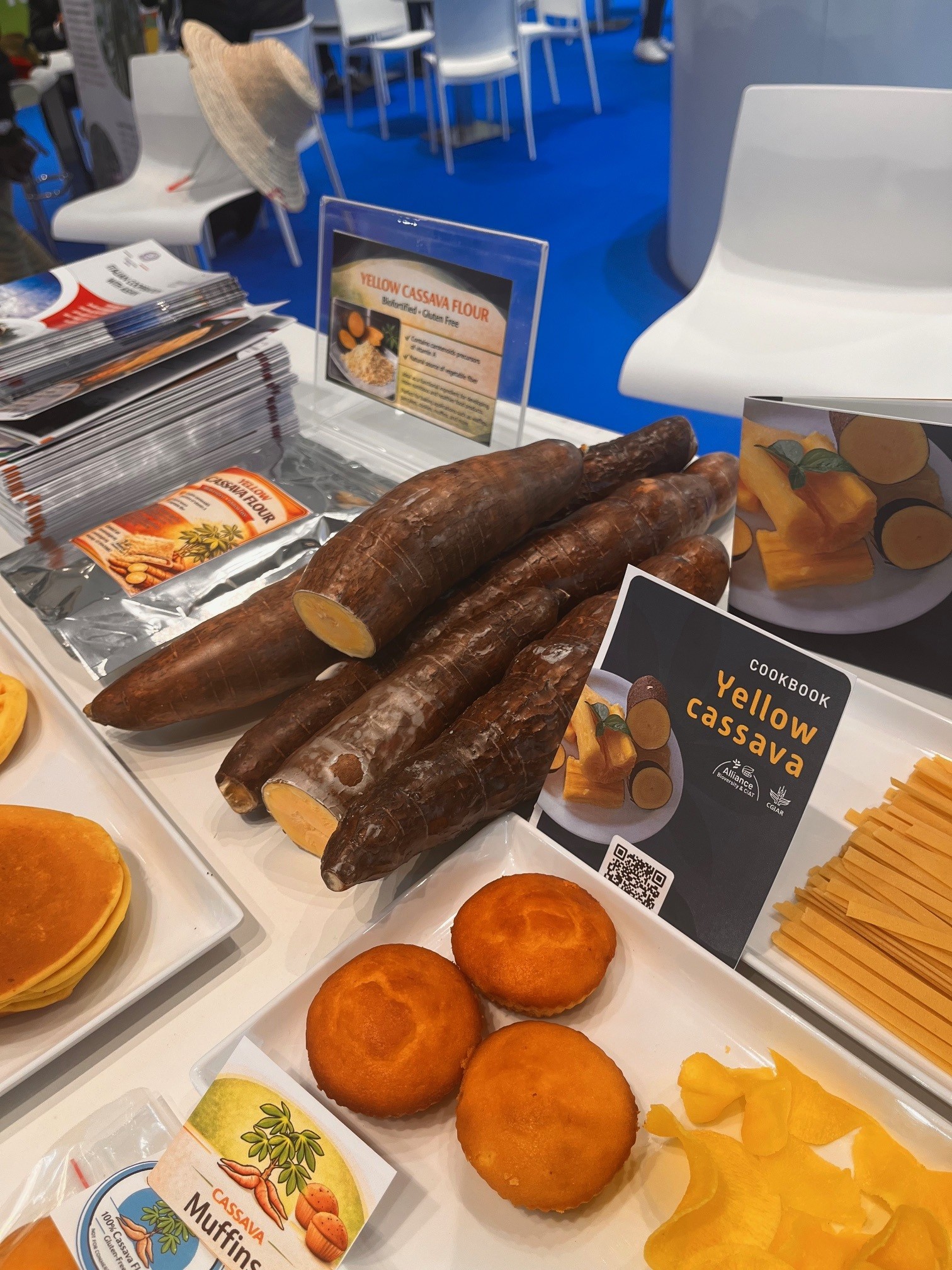
During the side events, significant interest was generated by the tasting of cassava-based products—including muffins, chips, crêpes, waffles, and biscuits—which attracted many visitors. This provided a valuable opportunity to promote this tuber, extremely versatile yet still relatively little known, despite its many food and industrial applications. Cassava starch is increasingly used in the production of gluten-free and highly digestible foods, as a natural thickener and for its high energy content. Its food development is closely linked to technological innovation, scientific research, and development, particularly in countries exposed to food insecurity risks, where the 3S initiative aims to intervene.
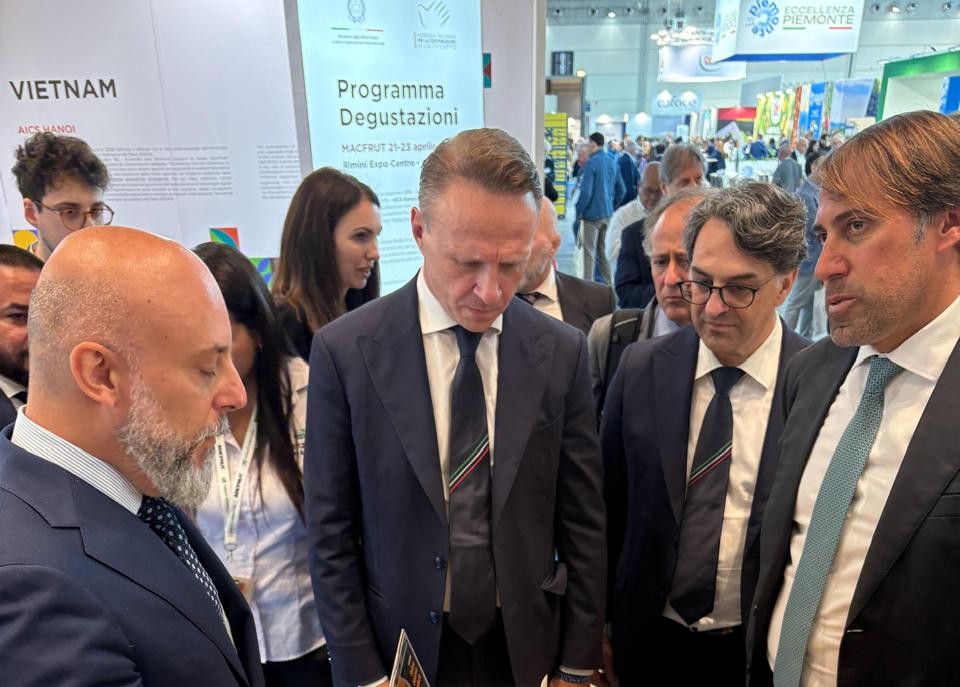
The AICS Hanoi stand also received a visit from the Minister of Agriculture, Food Sovereignty and Forests, Francesco Lollobrigida, accompanied by AICS Director Marco Riccardo Rusconi. During the meeting, the Minister highlighted the importance of Italian excellence in agricultural mechanization, a key component of the 3S project, capable of increasing yields and making the entire production process more resilient to climate change.
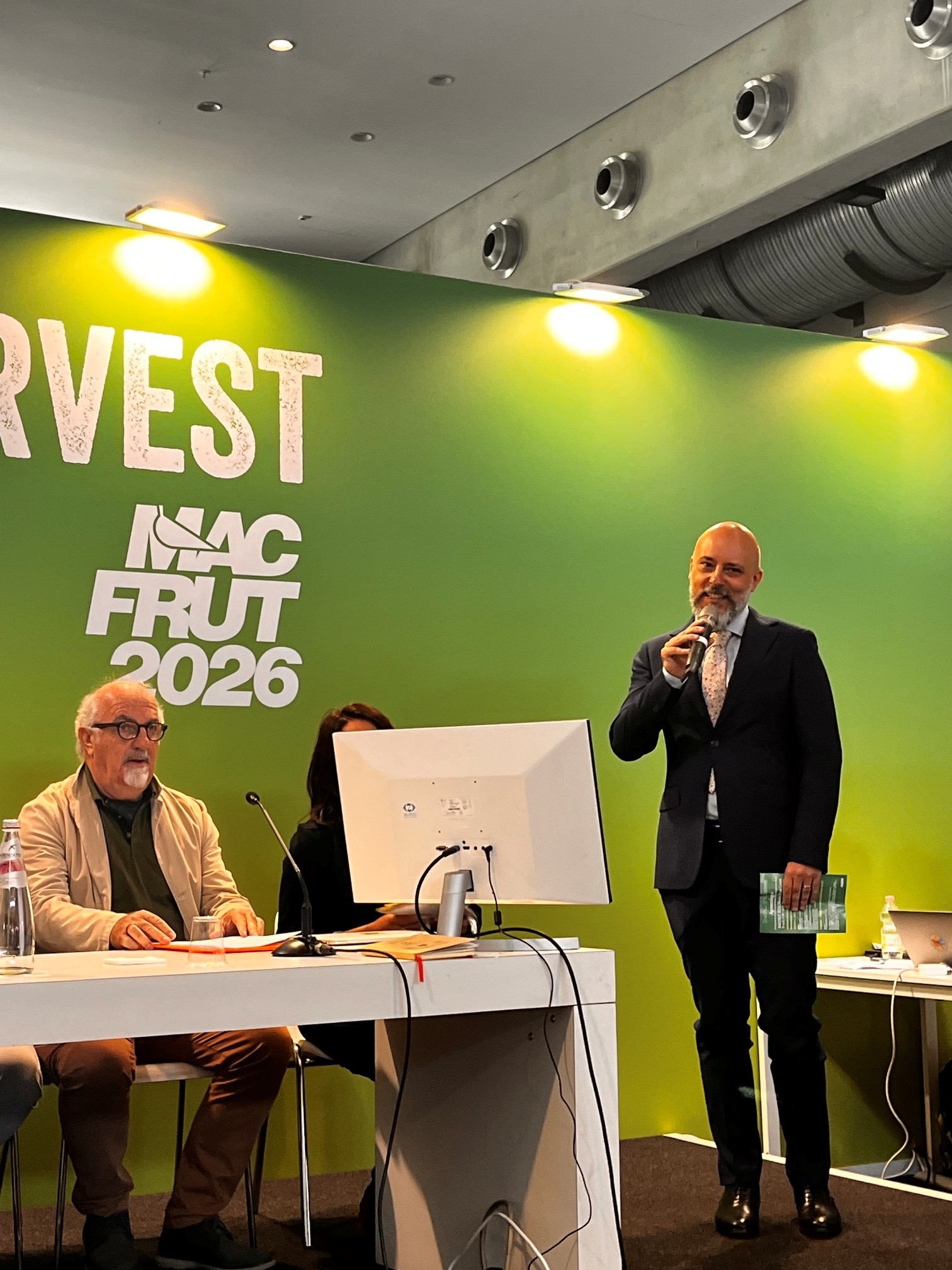
During the roundtable dedicated to Agroecology and the sustainable future of food systems, Professor Matteo Dell’Acqua of the Sant’Anna School of Advanced Studies of Pisa, partner in the 3S project, highlighted how the two priorities of the ecological transition—biodiversity protection and the valorization of local seeds—are already delivering tangible results in experiences similar to that of the 3S project. He reiterated that agroecology represents the necessary bridge between ecosystem protection and the prosperity of small-scale producers.